The Art of Translating Emotion into the Visual Realm
On Sensitivity, Human Experience and the Transformative Power of Art.
Some experiences last only a moment in our lives, yet somehow manage to occupy an entire universe inside us. Certain things and beings have a way of making the ordinary feel extraordinary. Their presence, energy, or very essence can awaken an overwhelming sense of admiration, fascination, and longing. We begin to perceive them as almost magical, godly, and otherworldly, while an entire inner world quietly takes shape around the experience.
In this personal reflection, I explore how an intense, unspoken emotional experience became the inspiration for a celestial visual art series. Through cosmic landscapes, ethereal figures and dreamlike compositions, I translate an inner emotional landscape into visual form, exploring the relationship between human connection, imagination, longing and the transformative power of artistic creation.
I created this body of work because the emotional intensity of the experience had become too overwhelming to contain within myself. I needed to give it a place beyond my inner world, to transform something invisible and intangible into something tangible. Through the process of creation, the artworks became vessels for emotions I had once carried internally. They now exist within the work, allowing me to step back, find distance and give my inner world the space to breathe. What once occupied me so deeply has become something I can observe, revisit and ultimately release.
I am the kind of person who can admire things deeply. Some things in life are so beautiful that the feeling of awe becomes intertwined with pain. I can admire something so intensely that it actually hurts. And the things I am referring to can be almost anything that exists. Most often, it is nature, nostalgia, music, animals, and sometimes other human beings. I can look at a mountain and become so overwhelmed by its beauty that my chest begins to ache. When I stood above the Zrmanja River canyon for the first time, I was so deeply moved by its beauty that tears began to well up in my eyes involuntarily. I really do try to remain stoic in public, and I think I manage quite well. But when I feel safe, I allow myself to release these emotions of intense admiration.
When Beauty Becomes a Physical Experience: Stendhal Syndrome
While trying to understand this particular sensitivity to beauty, I came across something called Stendhal syndrome. I was immediately intrigued by the idea that an encounter with something extraordinarily beautiful could produce such an intense emotional and physical response that it almost overwhelms the person experiencing it.
The phenomenon takes its name from the nineteenth-century French writer Marie-Henri Beyle, better known by his pen name, Stendhal. During a visit to Florence in 1817, he described becoming profoundly overwhelmed by the beauty of the city and its artistic treasures. While visiting the Basilica of Santa Croce, surrounded by extraordinary works of art and the tombs of great historical figures, he experienced palpitations, weakness and a sensation of being close to fainting. His account described an encounter with beauty that seemed to transcend ordinary appreciation and become an almost physical experience.
More than a century later, Italian psychiatrist Graziella Magherini began documenting similar reactions among visitors to Florence. She observed people who experienced acute physical and psychological disturbances after encountering the city’s artistic and architectural heritage. These observations eventually gave rise to the term Stendhal syndrome, which describes an unusually intense response to overwhelming aesthetic experiences. Reported symptoms include dizziness, palpitations, sweating, chest discomfort, confusion and, in more severe cases, fainting or disturbances in perception.
The phenomenon sits at an interesting intersection between art, psychology, neuroscience and aesthetics. It is not an established psychiatric diagnosis, and the scientific evidence remains limited. Nevertheless, it raises a fascinating question:
How can the experience of beauty affect us so profoundly that it produces a physical response?
I found myself recognising something familiar in this description. I have experienced moments when beauty seemed to exceed my capacity to contain it. Standing before an immense landscape, listening to a particular piece of music or encountering something that awakens an extraordinary sense of admiration, I sometimes feel as though my entire body participates in the experience. It is not simply that I recognise something as beautiful. I feel its beauty. It moves through me, sometimes bringing tears to my eyes, tightening my chest or leaving me with an almost painful sense of awe.
I do not know whether these experiences have anything to do with Stendhal syndrome in a clinical sense, and I would not claim that they do. What interested me was discovering a concept that described, at least in part, the possibility of beauty becoming a physical and emotional experience rather than remaining a purely visual one.
It also made me reflect on something else. My response to beauty is not limited to landscapes, artworks or the natural world. Occasionally, I experience a similarly overwhelming sense of admiration towards another human being. The object of admiration changes, but the intensity of the response feels strangely familiar. It is as though the same sensitivity that makes me cry before a landscape can, under certain circumstances, be awakened by the presence of a person.
And that brings me to Apollo.
An Encounter with Something Otherworldly
This body of work was inspired by an intense feeling of admiration for another human being. This rarely happens, but when it does, I usually experience this overwhelming sense of beauty in relation to women. This time, however, it was a man. It wasn’t love. It was a deep appreciation for the mere existence of something so beautiful. It was the feeling of seeing something so extraordinary that you could hardly believe your eyes. Almost as though what you were witnessing wasn’t real, but something out of a dream.
That is what happened when I encountered this man. Let’s call him Apollo. I remember the first time I met him. The experience has remained in my memory as though it had never quite happened in reality. There was something almost dreamlike about it. He was like a fairy-tale being. Otherworldly. Godly.
But what I remember most vividly is not simply how he looked. It is how I felt in his presence. From the very beginning, there was an extraordinary physical response. It was a strange combination of feeling safe, at home, exhilarated, electric, magnetic and almost feverish. I felt as though my body had recognised something before my mind could make sense of it. His presence seemed to activate a sensation of deep comfort and intense pleasure at the same time, as though something about his energy resonated with my nervous system in exactly the right way.
I struggle to find words that adequately describe it. It wasn’t ordinary happiness, nor was it simply the excitement of being attracted to someone. It was something much more physical. I felt exceptionally good inside my own body. There was a sense of warmth, ease and safety, accompanied by an almost intoxicating rush of energy. It was like getting high without taking anything. I could feel it throughout my body, and for a while, I didn’t want it to stop.
Being around him became an experience in itself. I looked forward to seeing him, not necessarily because I expected anything to happen, but because I wanted to experience that sensation again. Even the most ordinary moments could evoke it. I could simply be in the same room, listen to his voice or observe him moving around, and feel that peculiar mixture of comfort and exhilaration. It was as though his presence allowed me to access a state of being that I rarely experienced otherwise.
At first, these sensations were overwhelmingly pleasurable. They made me feel alive in a way that is difficult to explain. But as time passed, their intensity began to grow. What had initially felt effortless and almost euphoric gradually developed into something I could no longer comfortably contain. A tremendous amount of emotional and physical tension began accumulating, with nowhere to go and no way to release it. The experience was still pleasurable in its essence, but the intensity had become difficult to bear. I found myself caught between wanting to remain in the presence of something that evoked such extraordinary sensations and needing relief from the tension that was building inside me.
Eventually, I decided to stop going to the place where we used to see each other. I did not leave because something had happened. I left because nothing had. There was no argument, no rejection, and no dramatic ending. I simply reached a point where I needed to step away. I could no longer keep returning to the same environment, experiencing such intense sensations and allowing all that unreleased tension to accumulate. Distance became necessary, even though it was not what I wanted.
But stepping away did not make the sensations disappear. I still carried the experience within me, and I needed somewhere to put everything that had been awakened. That is when I turned to art. I began translating those sensations into images, giving form to something that had existed almost entirely within my body. The artworks became a way of expressing what I could not adequately describe through words, and of allowing an overwhelming internal experience to exist somewhere outside myself.
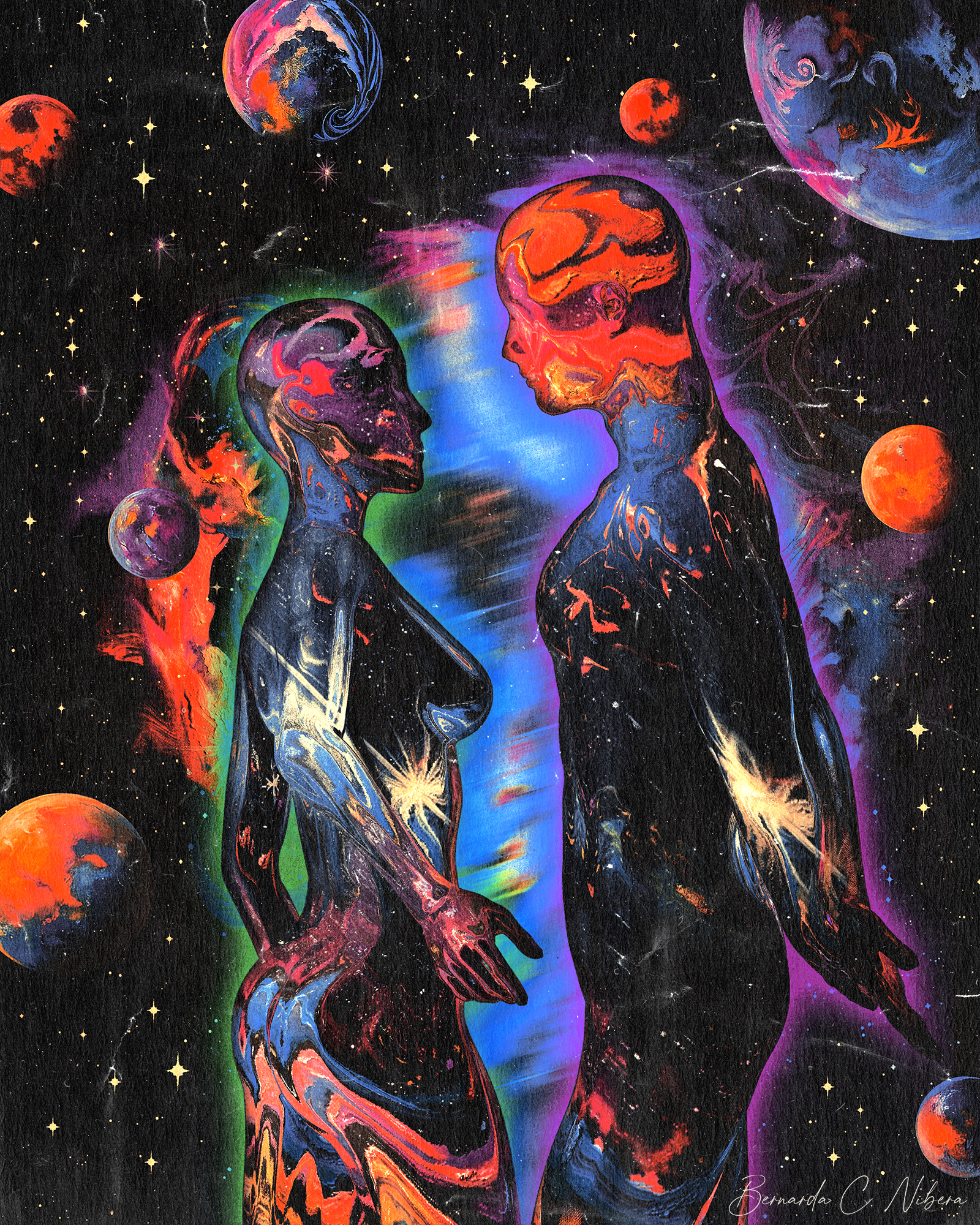
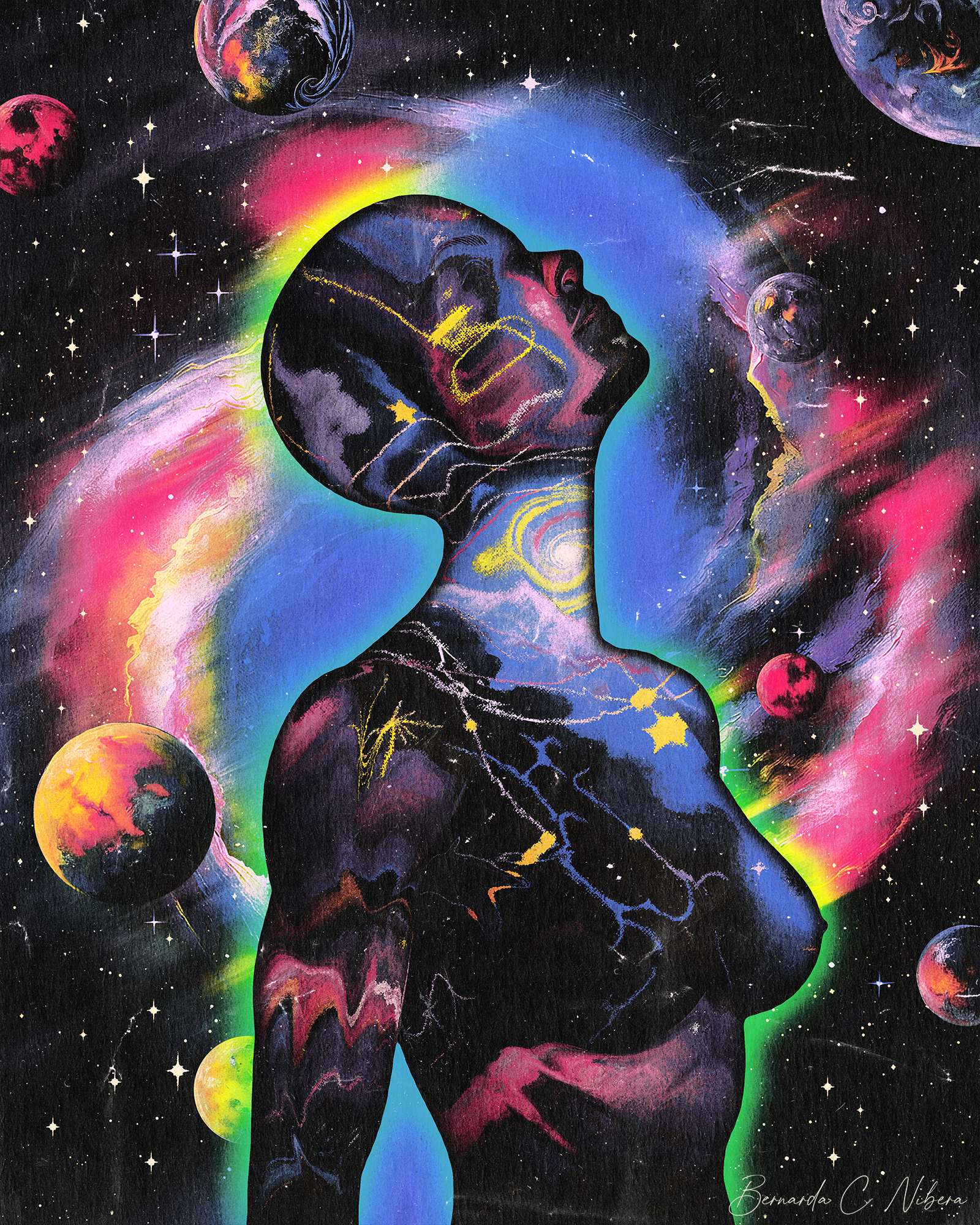
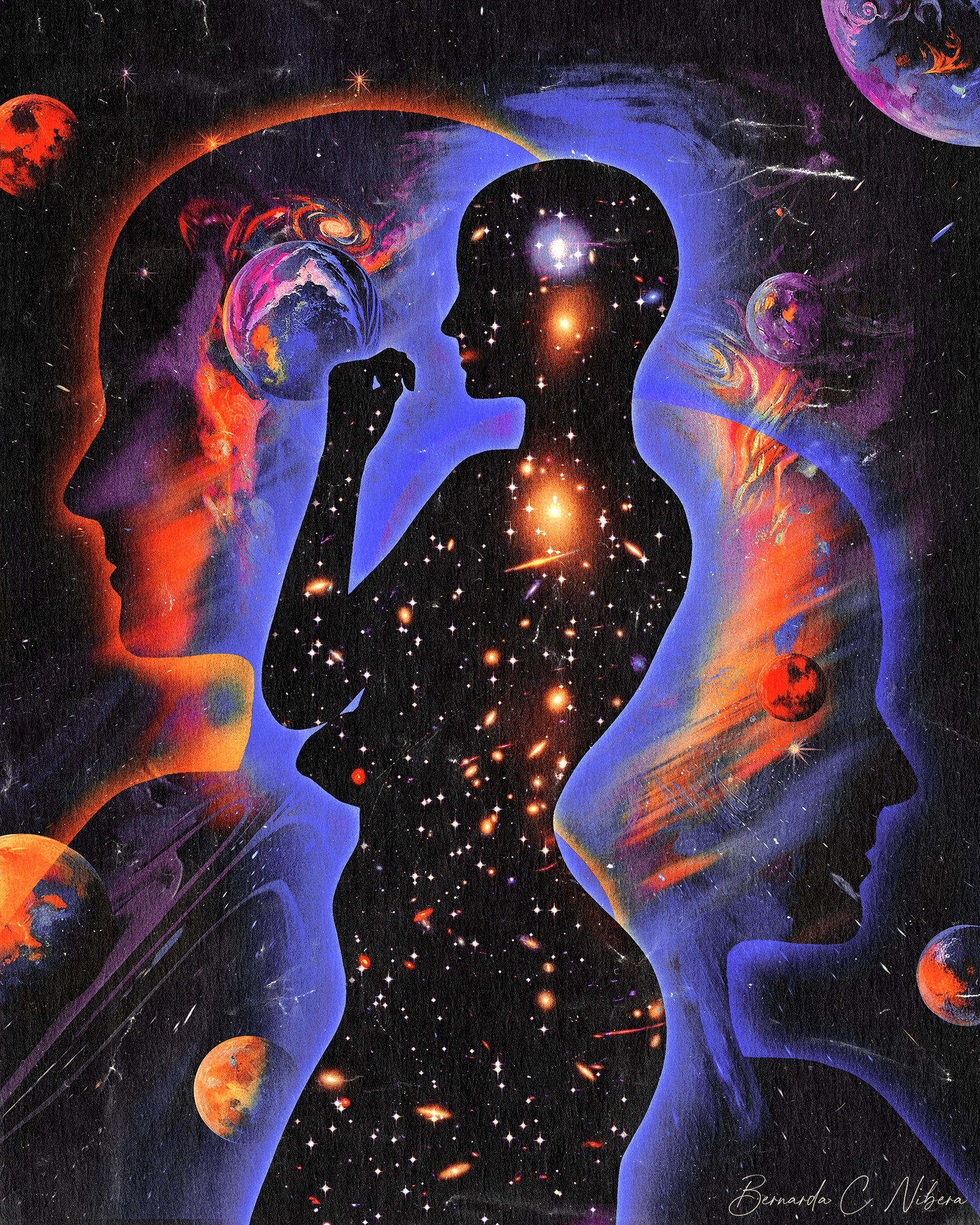
This is also why a female figure appears alone in so much of the series. She is not necessarily depicting loneliness in the conventional sense. She represents the person experiencing these sensations from within. Even though the connection felt mutual, the experience I am depicting was ultimately mine. Whatever Apollo may or may not have felt, I was the one experiencing this extraordinary physical and emotional response. The female figure embodies that inner world: the electricity, the magnetism, the pleasure, the tension and the longing. She exists within the experience, even when there is no one beside her to share it.
She is not waiting for someone to complete the image or give meaning to her experience. She is already immersed in an entire internal world of her own.
Apollo became a name I gave him in my own private mythology, a way of separating the person from the feelings and associations that gradually gathered around him. I wanted to write about the experience without exposing the person who had unknowingly become part of it. In many ways, Apollo is not simply a character in this story. He represents a particular moment in my life, an extraordinary physical and emotional experience, and the strange inner universe that can develop around an encounter whose meaning is never fully established.
I am still grateful that the experience happened. Even though it eventually became too intense for me to handle, I would not want to erase it. I will always cherish those moments when my body felt so safe, so at home and so extraordinarily joyful. There was something almost surreal about them, similar to waking up naturally from a perfect dream, when you are still immersed in that wonderful feeling and wish you could remain there a little longer.
Perhaps that is what makes the experience so difficult to explain. It was not simply about wanting someone or wishing for a relationship. It was about encountering something that evoked a sensation I had never quite experienced in the same way before. For a while, I was able to inhabit that feeling. Eventually, I had to step away from it. But the experience itself remains worthy of existing, and through art, I found a way to preserve something of what it felt like.
While trying to understand why certain encounters leave such a profound impression on me, I began recognising that this experience was not entirely isolated. It was connected to a broader pattern in the way I experience fascination, attachment and longing.
The Limerence
Limerence is commonly described as an intense, involuntary state of romantic fascination and emotional fixation directed towards another person, often accompanied by idealisation, intrusive thoughts, longing and fantasies of reciprocation.
While exploring this concept, I began recognising a broader pattern in my own experience. Although limerence, in its established psychological sense, concerns romantic fixation on another person, I have noticed that I can experience a similarly intense form of fascination and longing towards other things as well. This can include places, animals or other encounters that have left a profound emotional impression on me.
I sometimes find myself revisiting a place in my imagination, longing to return to an environment I once experienced, or becoming so fascinated by an animal I briefly encountered that I find myself fantasising about seeing it again or making it part of my life. These experiences are not necessarily romantic, but they share a similar intensity of admiration, idealisation, emotional attachment and longing.
In this personal reflection, I use the concept of limerence as a starting point for exploring this broader, recurring pattern of becoming deeply fascinated by someone or something and carrying that fascination within my inner world.
For example, when I was a child, I found myself longing for and fantasising about a particular dog. One day, while walking home from school, I came across him. He was a Husky, and he was alone. I ended up spending three hours with him in the park, simply petting him and enjoying his company. He was incredibly friendly. I even had an entire photo session with him using my first compact digital camera.
I didn’t want the encounter to end, and I found it incredibly difficult to make myself go home. When we finally parted ways, I immediately started longing for him and fantasising about seeing him again. I imagined running into him the following day. When that didn’t happen, I started looking for him around the neighbourhood. I never encountered him like that again. I suspect he had either run away or somehow gotten loose.
Some time later, I discovered where he lived. He was kept in a dog cage in front of a house. I felt butterflies in my stomach when I saw him. From then on, I visited him almost every day, even if only for a brief moment to pet him. I never met his owners. But those encounters were never quite the same as our first one. He was behind a fence, and there was always a physical barrier between us. It made me sad.
I started fantasising about how I could go there at night, take him away and bring him home with me, where he would finally become my dog. What made me particularly sad was knowing that he would never really be part of my life. I imagined taking him for walks, having him at home and sharing all those ordinary moments with him. But that life existed only in my imagination.
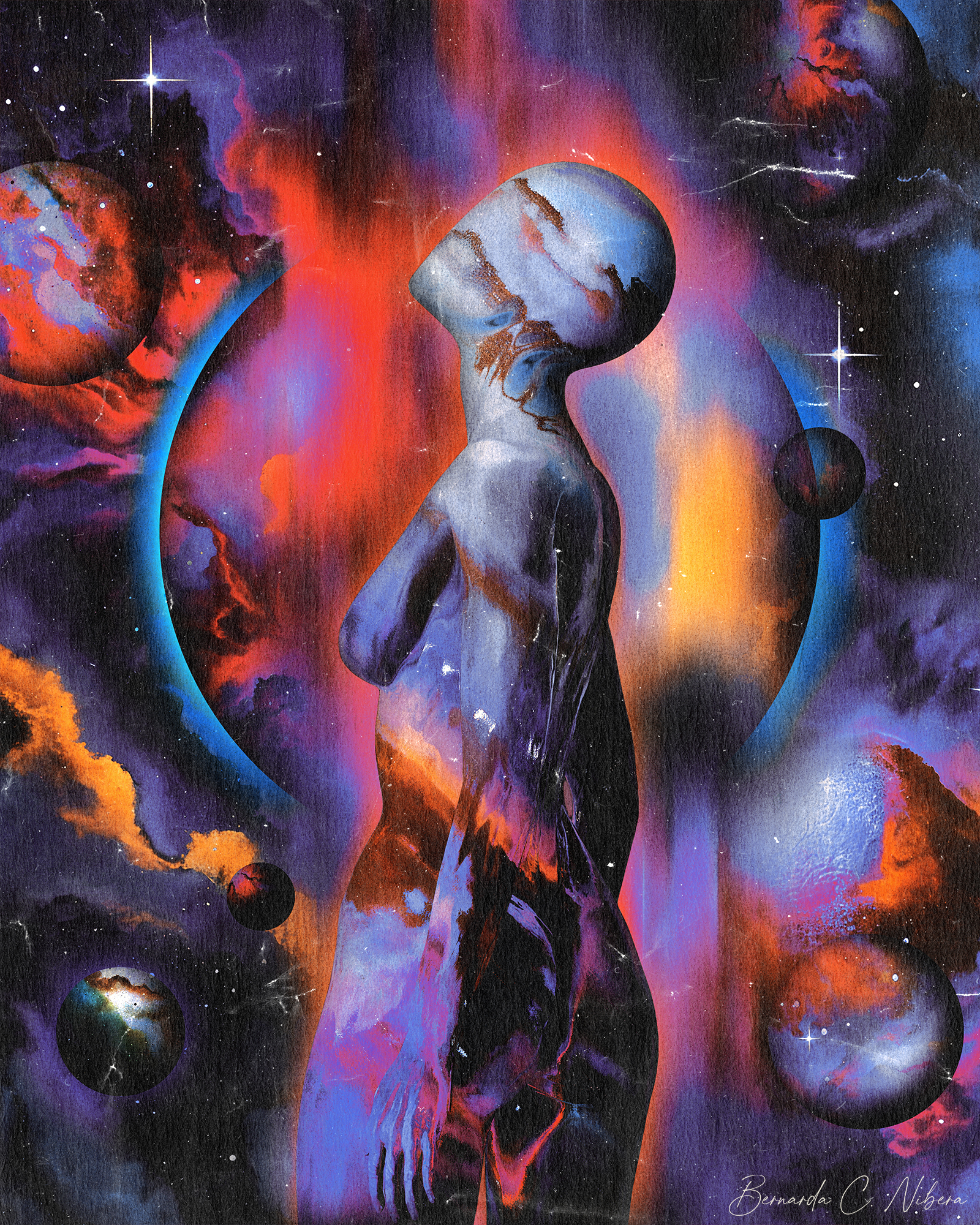
When emotion becomes an image
I have always been interested in the relationship between visual imagery and emotion, but this experience made that relationship feel much more personal. I found myself returning to my creative practice with feelings that I could not quite put into words. I was not consciously trying to document a story, nor was I initially thinking about creating a coherent series. I simply began translating what I felt into images.
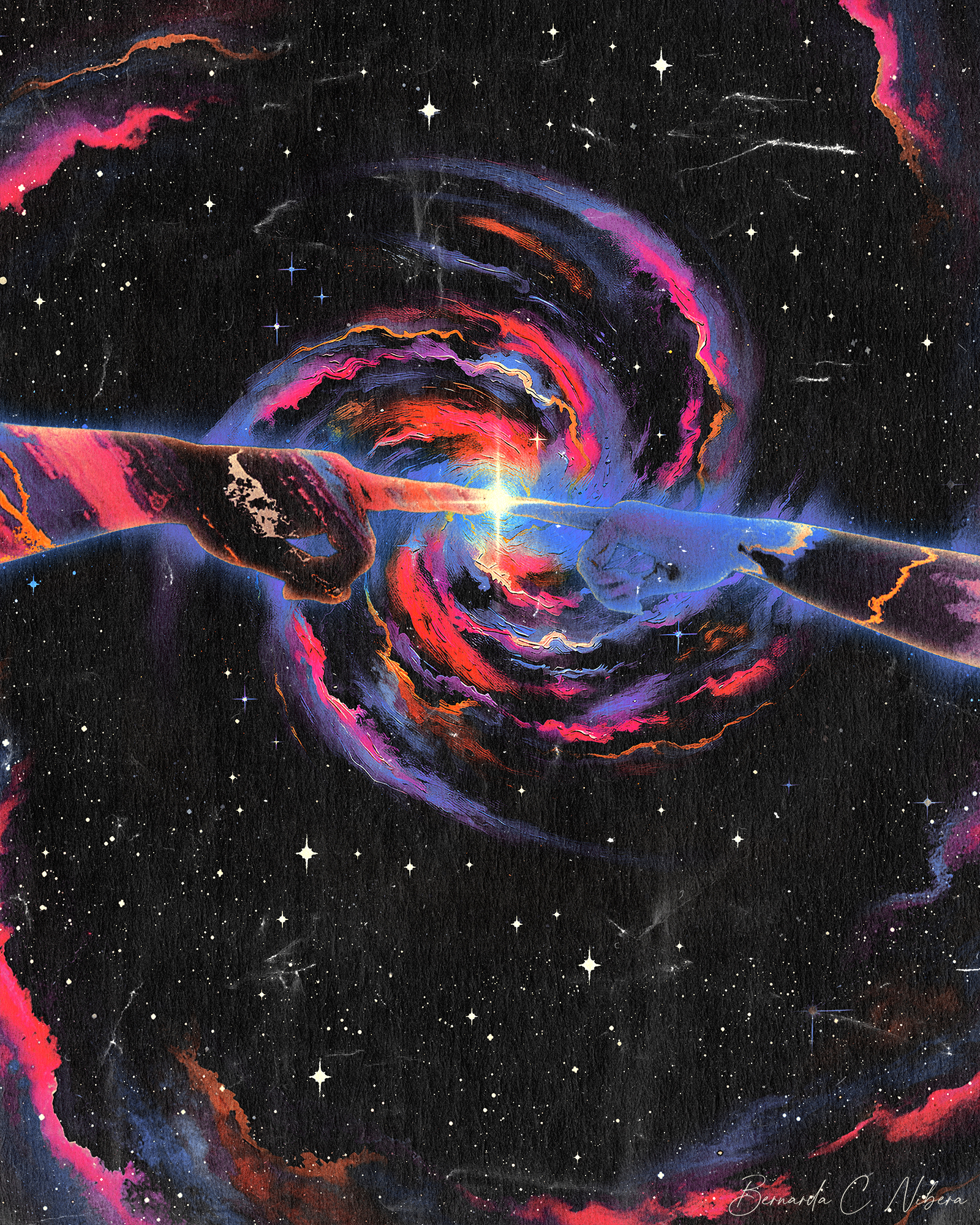
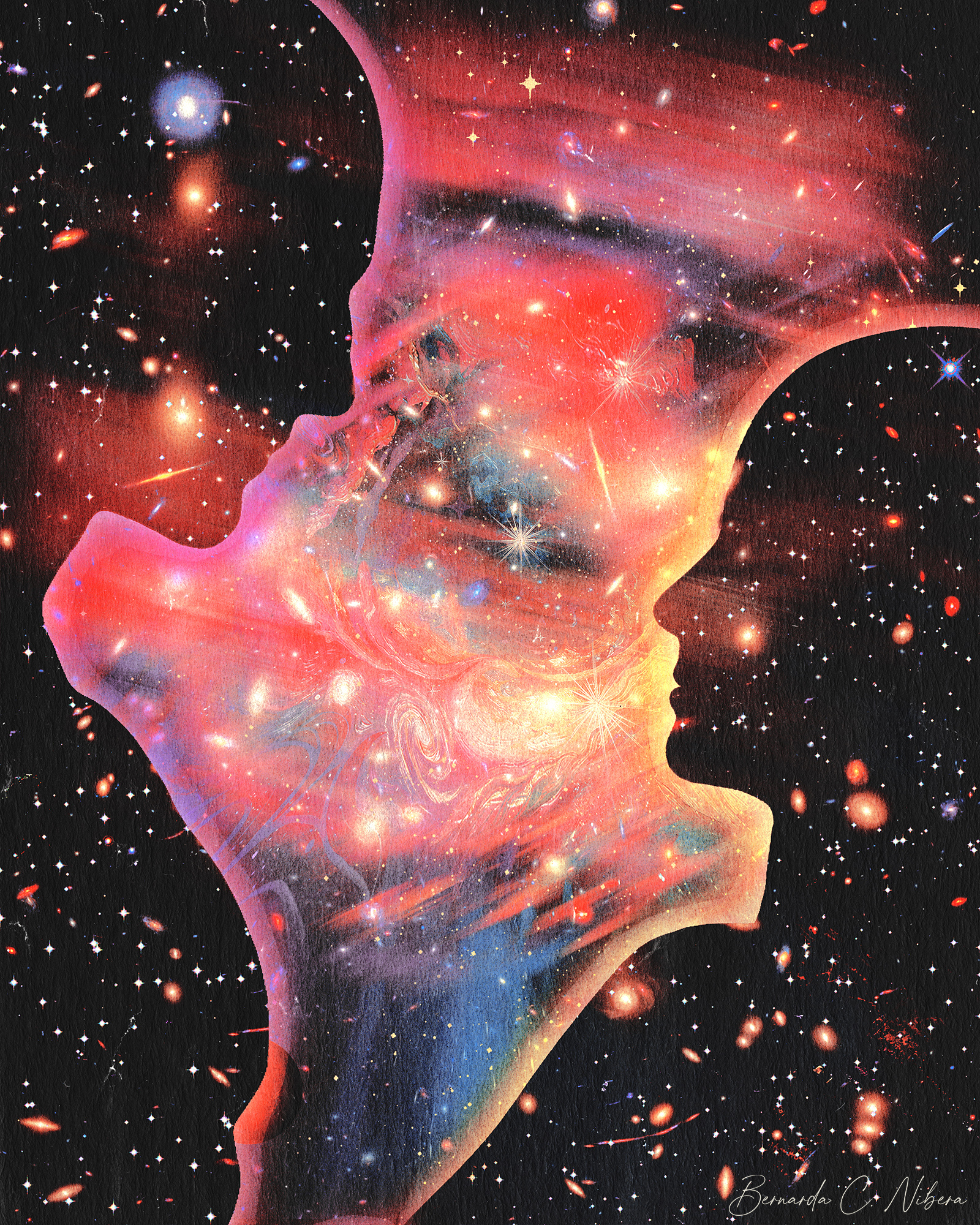
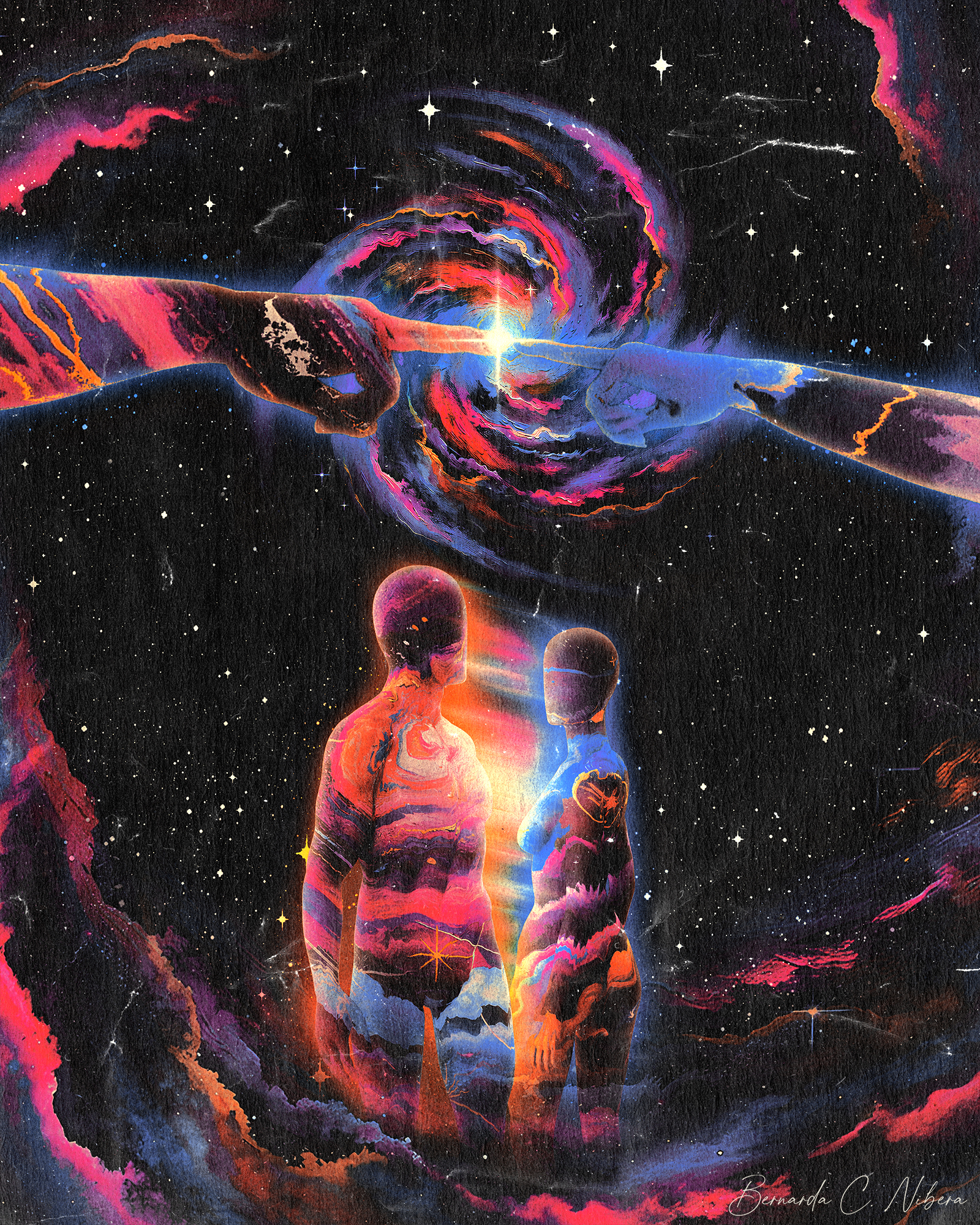
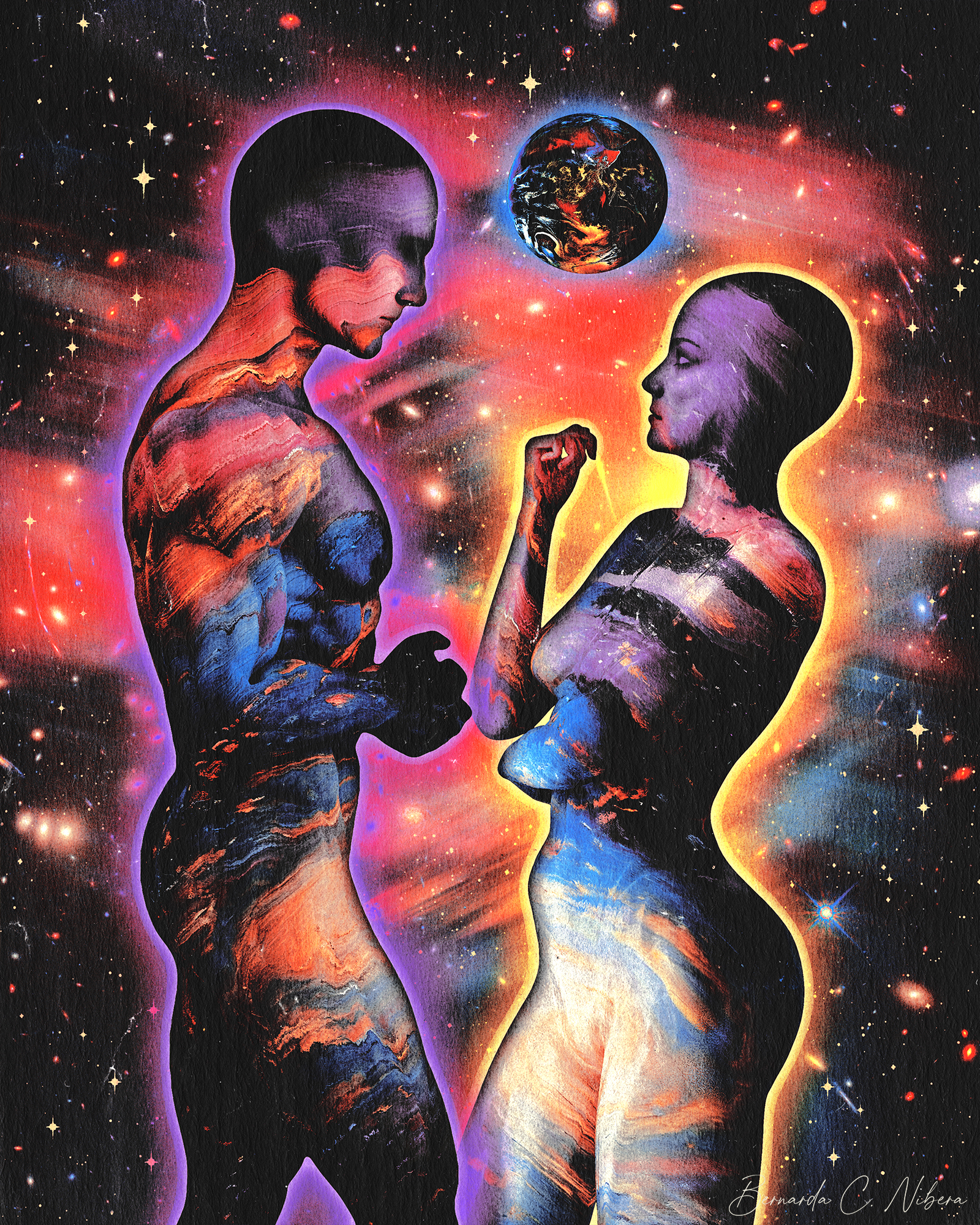
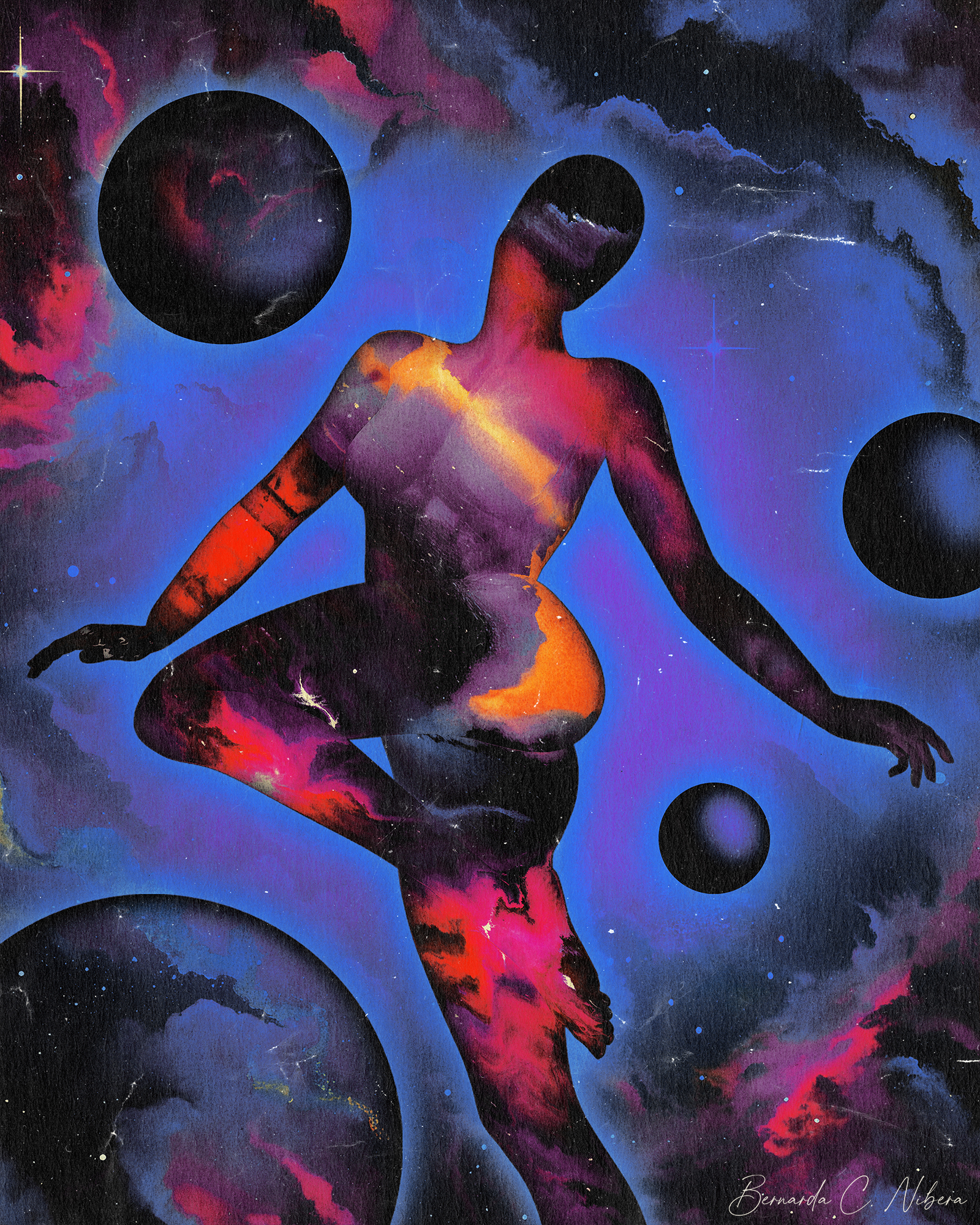
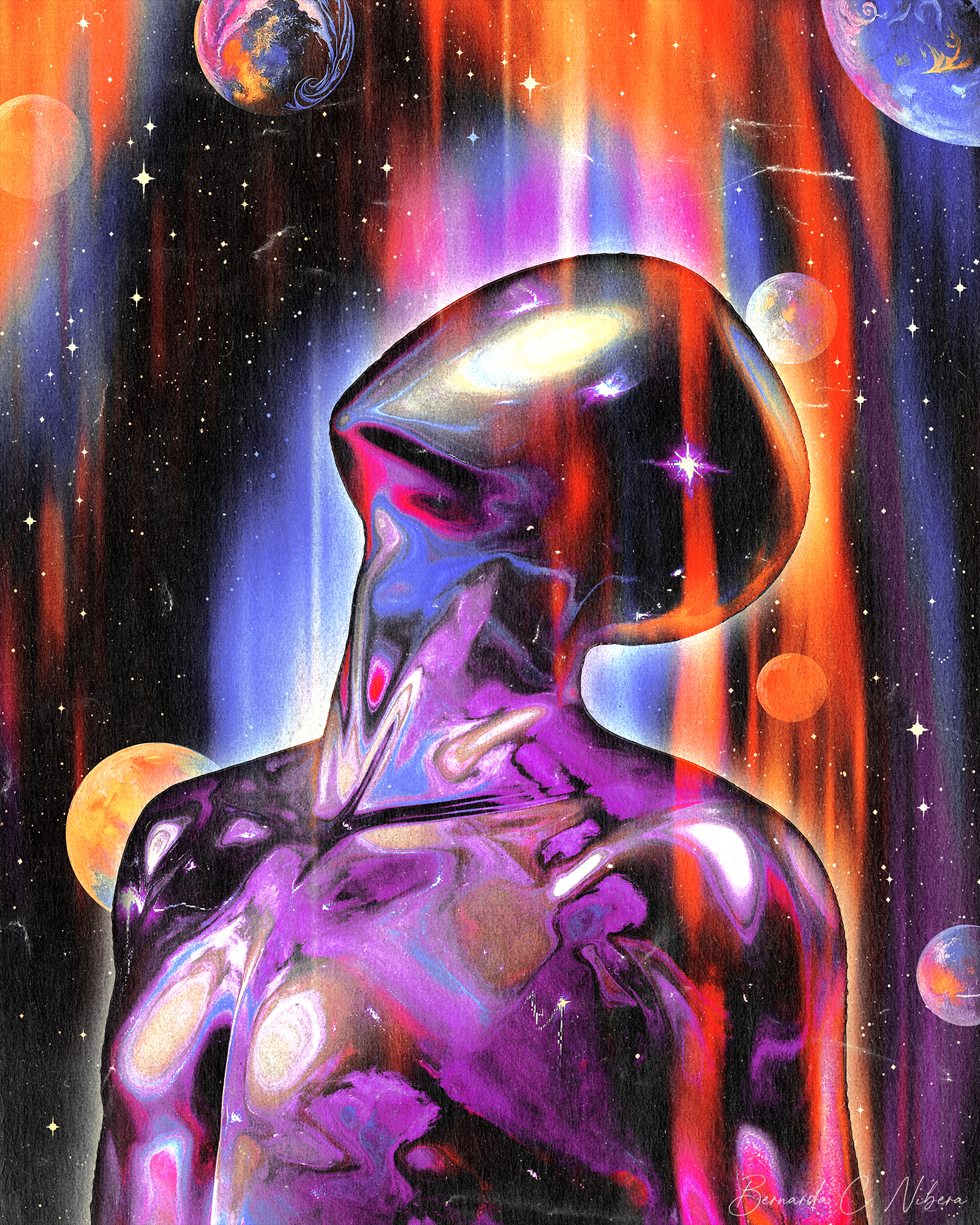
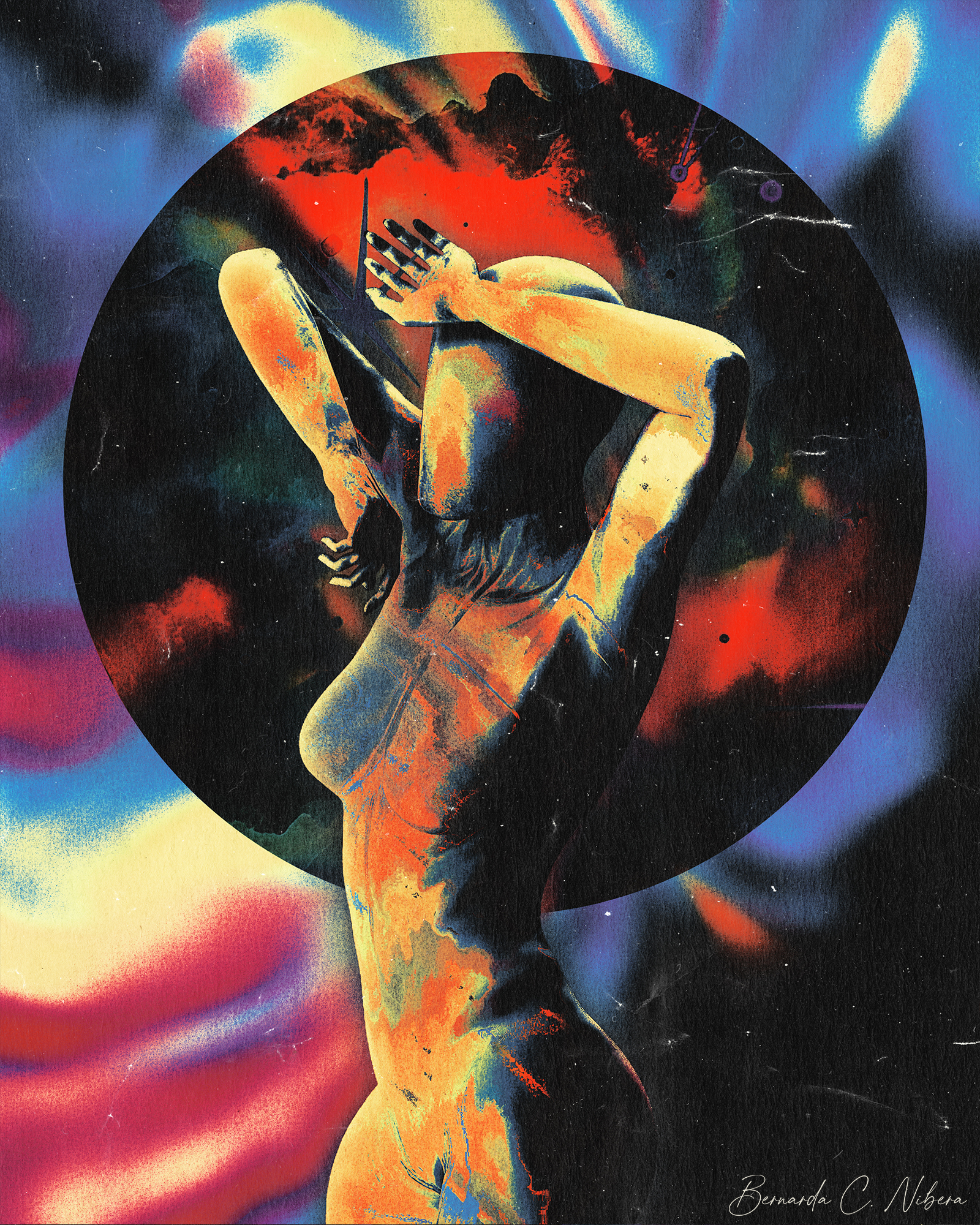
The works developed through an intuitive process. Cosmic landscapes, distant figures, dreamlike environments, abstract forms, and unusual combinations of colour began to emerge. Some compositions suggested two presences existing in the same space while remaining separated. Others seemed to explore attraction, movement, distance, or the sensation of reaching towards something that could not quite be touched. There was an atmosphere of familiarity and alienation at the same time, as though the figures belonged to the same universe but were following different paths through it.
Looking back, I can recognise parts of my emotional experience in these images. The colours, the contrasts, the vast spaces, and the relationships between the forms seem to reflect feelings that I had not been able to articulate consciously. I did not sit down and decide to paint longing, uncertainty, or desire. Instead, those emotions found their way into the work through visual decisions I was making almost instinctively.
Perhaps this is one of the most interesting things about creating art from personal experience: the finished image can reveal something that the artist did not fully understand while making it. The creative process becomes a conversation with a part of yourself that does not communicate in ordinary language. You make a mark, introduce a colour, change the composition, and gradually something begins to take shape. It may not provide an explanation, but it gives the feeling somewhere to exist outside your own mind.
I started to see the artworks as fragments of an emotional landscape. They were not illustrations of specific events, nor were they intended to represent another person literally. They were interpretations of what the experience felt like from within: the energy, the uncertainty, the distance, the imagined possibilities, and the quiet sadness of accepting that some connections may never become anything more than what they were.
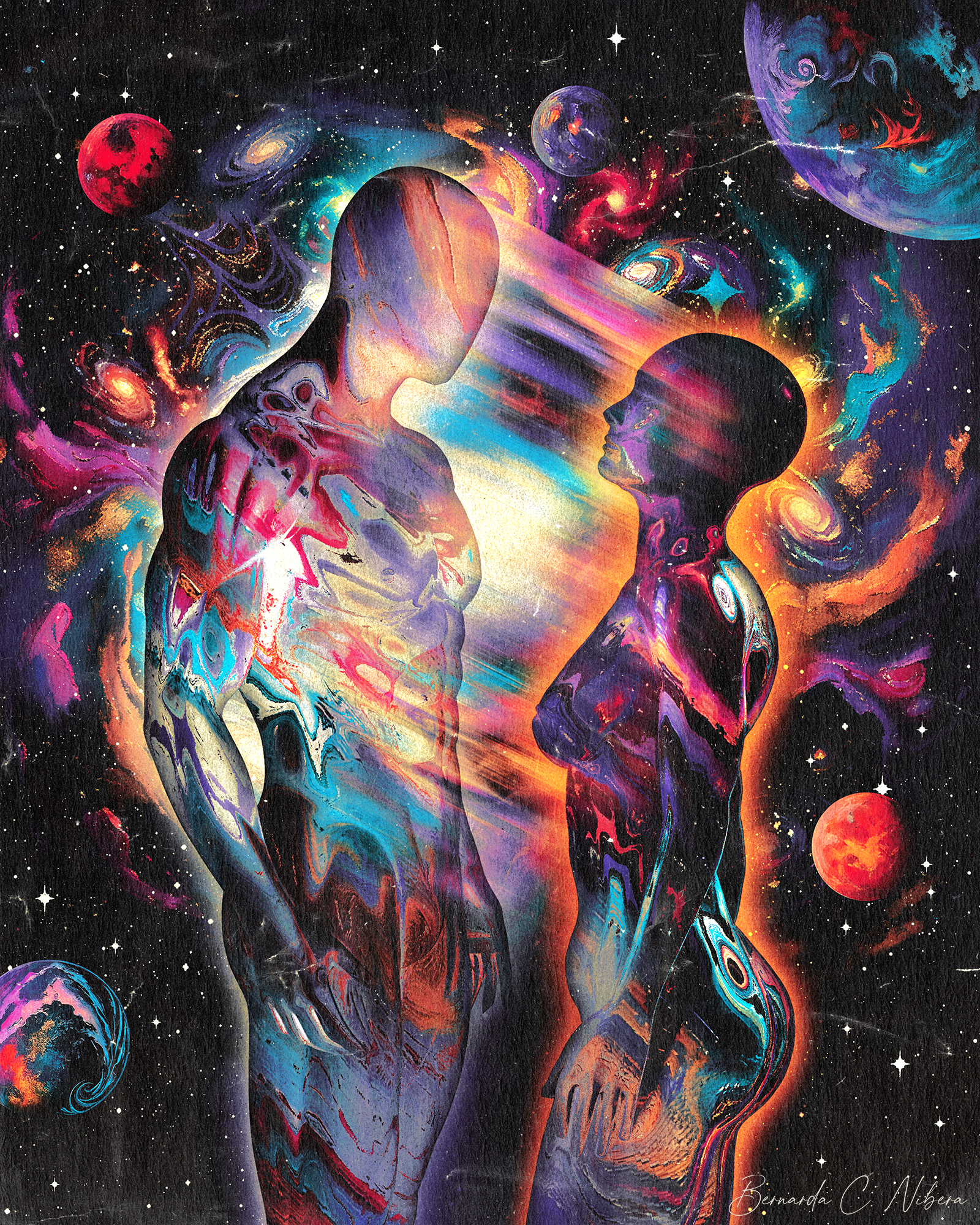
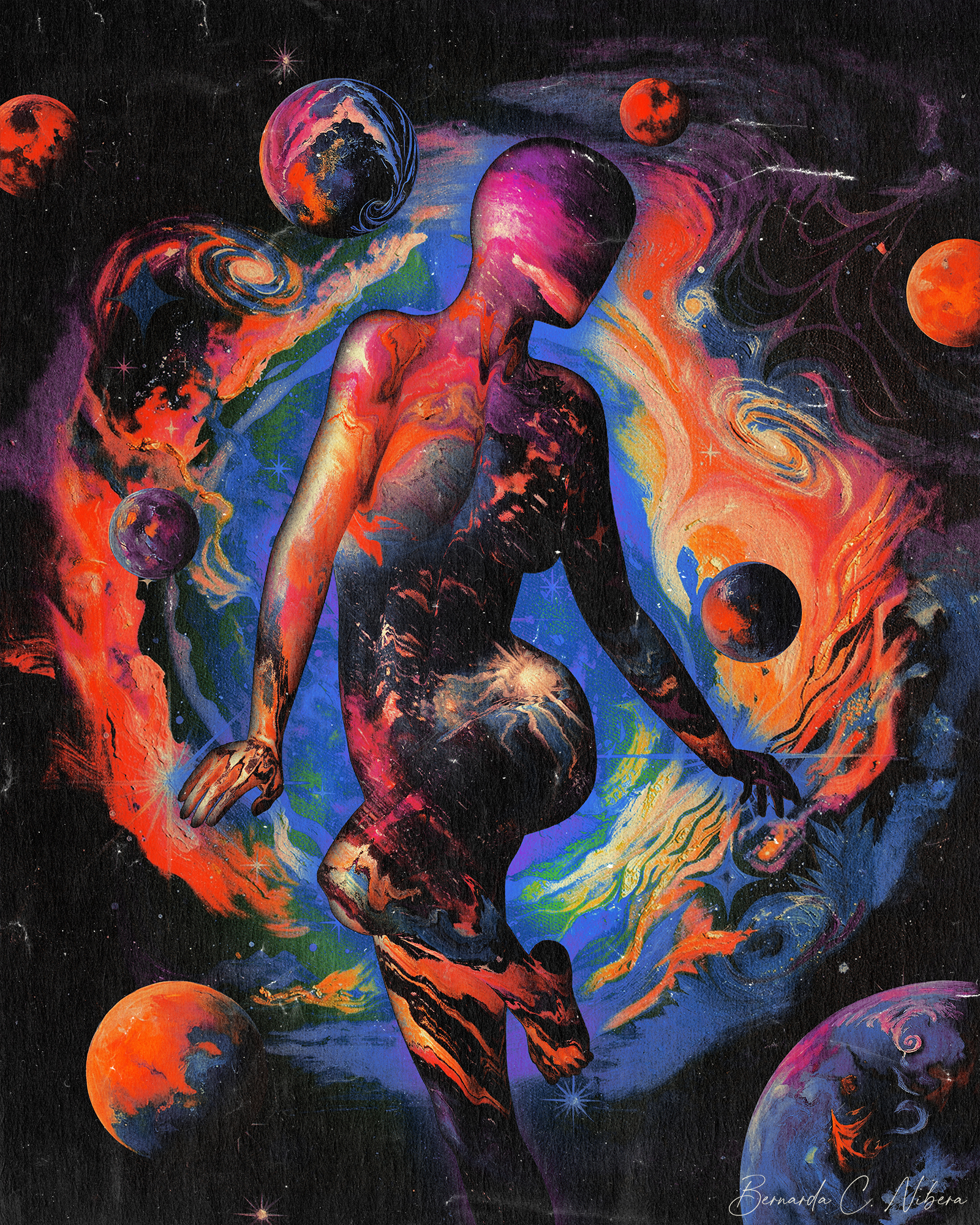
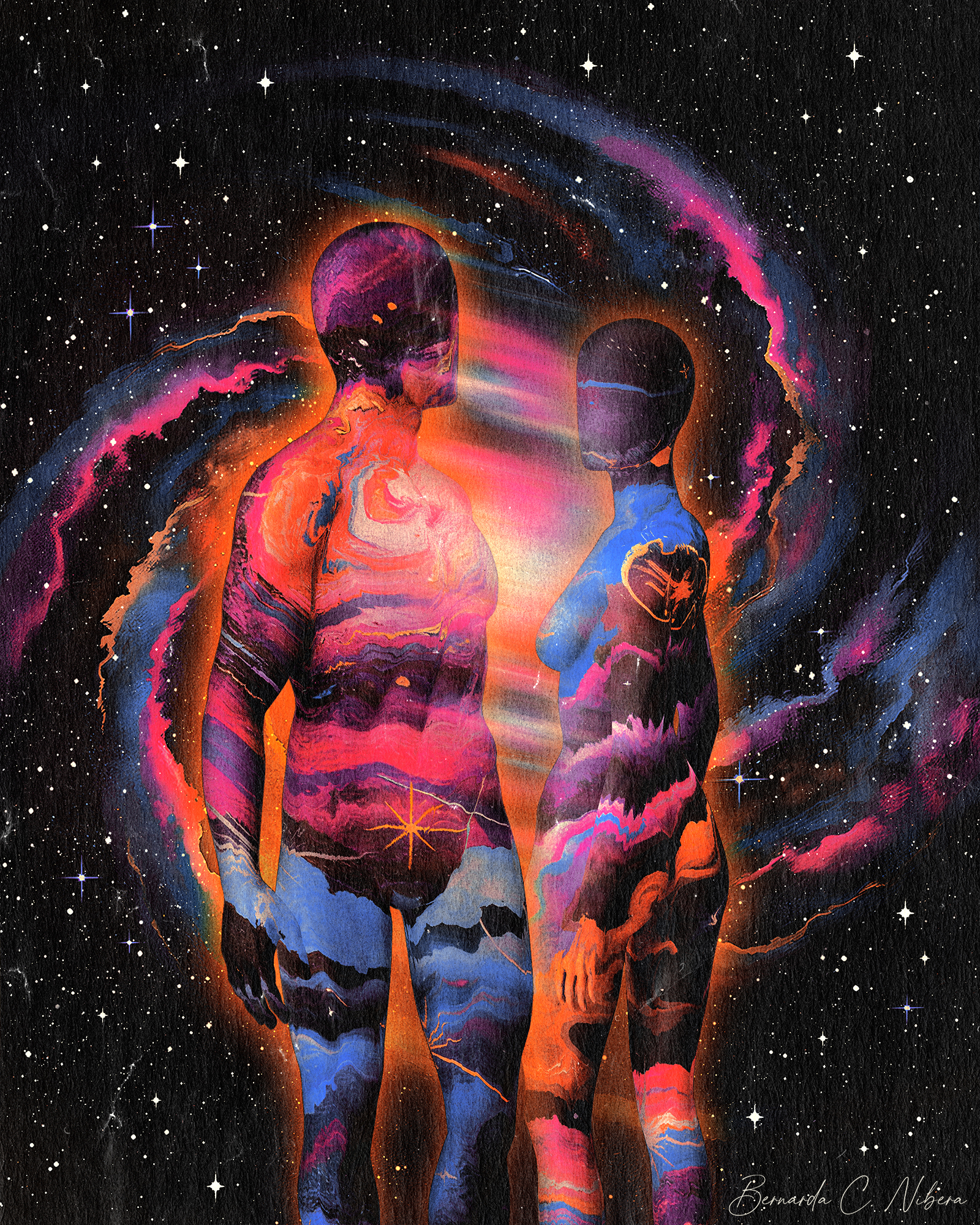
Turning the invisible into something tangible
I have often thought of art as a way of giving shape to things that are otherwise difficult to hold. Emotions are abstract, unpredictable, and sometimes contradictory. We can feel desire and sadness simultaneously, miss someone while knowing that distance is necessary, or cherish an experience while accepting that it cannot continue. These feelings do not always make sense when expressed through words. Visual creation, however, allows contradictions to coexist.
A single image can contain warmth and isolation, movement and stillness, closeness and separation. It can suggest a story without explaining it, leaving room for the viewer to recognise something of their own experience within it. This is what I find particularly meaningful about working with surreal and dreamlike imagery. It allows me to move beyond literal representation and explore the emotional atmosphere of an experience instead.
The series that emerged from this period is therefore not simply about one person. Although it began with a very personal experience, I hope it can speak to something more universal: the connections that remain undefined, the people we remember without knowing whether they remember us in the same way, and the emotions that sometimes have nowhere to go except into the things we create.
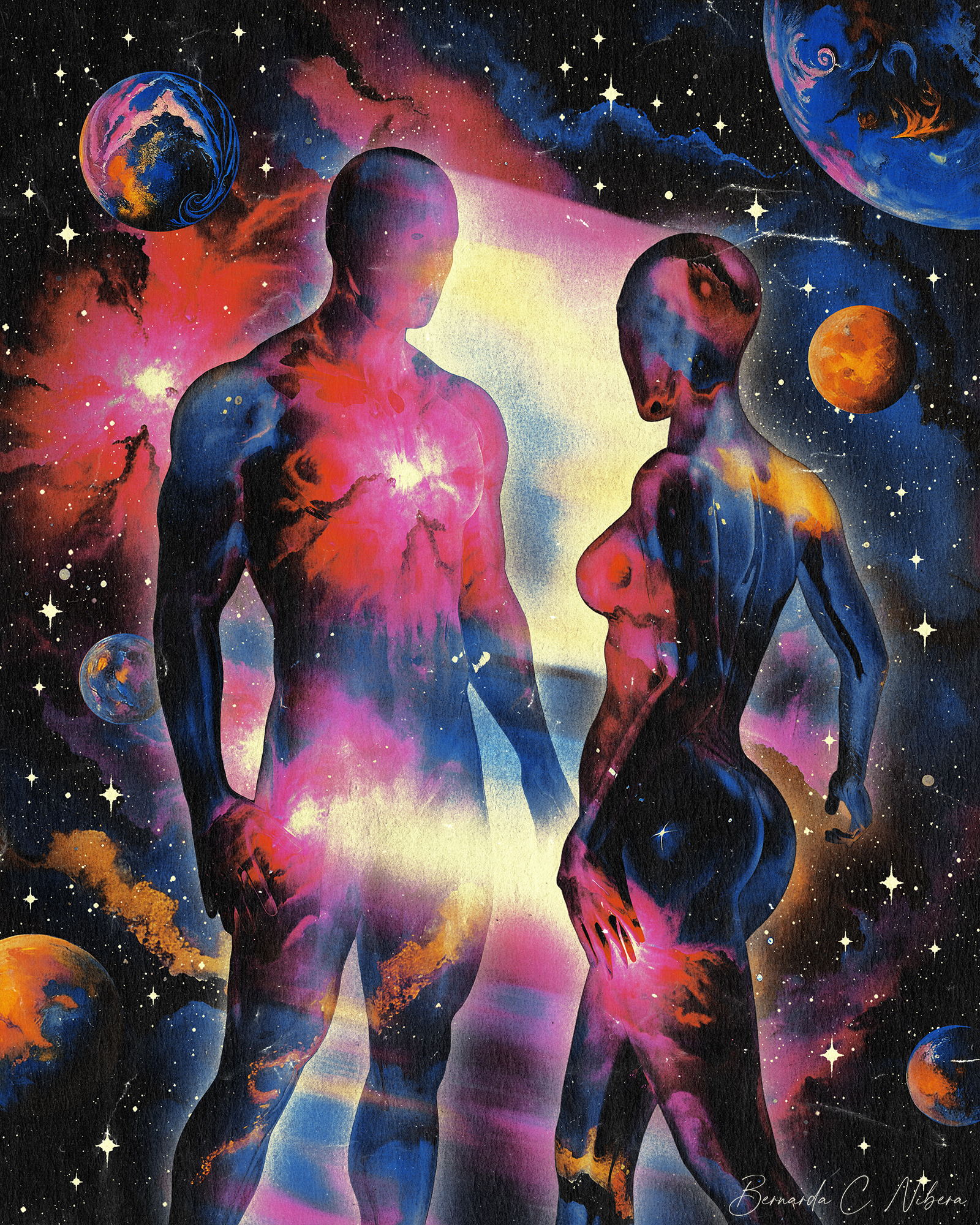
I called the series The Limerence because it explores the inner universe that can emerge from an intense fascination with another living being. It is a space shaped by longing, admiration, imagination and emotional projection. Somewhere between what we feel and what we know, between possibility and reality, and between the person standing before us and the person we gradually construct in our minds. It is also the space between an emotion and its expression: the place where something intangible begins to take visual form.
I do not know whether I will ever fully understand that experience. Perhaps I do not need to. What I know is that something I once experienced as confusing and painful eventually became a source of creative expression. I took a feeling I could not resolve through conversation, a story that never quite began, and transformed it into something that could exist beyond me.
And maybe that is one of the quiet gifts of making art: it does not always give us the answers we are looking for. Sometimes it simply gives us a way to keep moving, carrying the experience differently than before.
Letting go
There is a particular kind of intimacy in an unfinished story. When something never develops into something tangible, there are no shared memories of what it might have become, no ordinary routines to replace the anticipation, and no definitive ending to make sense of. Instead, the mind is left with possibilities. It can return to individual moments and imagine different meanings for them, filling the spaces between what happened with what could have happened.
I do not believe that every feeling needs to lead somewhere, or that every connection must become a something to have significance. Some experiences affect us precisely because they awaken something we had not realised was missing, or remind us of a part of ourselves that had become quiet. That does not necessarily mean the other person was destined to play a lasting role in our lives. Sometimes their presence is simply the circumstance through which we encounter something within ourselves.
The artwork, however, offered a different kind of resolution. It did not tell me what he felt, and it did not change what had happened. It allowed me to acknowledge what I had experienced without needing the experience to become something else. I could take the emotions that had occupied so much of my internal universe and give them form, colour, texture, and atmosphere. I could look at them from a little distance, rather than carrying them everywhere.
That distance was not immediate, and it was not absolute. I have not seen Apollo in six months. Even now, looking at some of the pieces brings back a sense of longing. I can recognise the emotional atmosphere in which they were created, and sometimes the chemistry I felt at the time seems to return with the image. But there is also something different about the feeling now. It is no longer entirely private or formless. It has become part of a body of work, something I can observe, revisit, and interpret from a new perspective.
Perhaps healing does not always mean forgetting. Perhaps it sometimes means being able to look at something that once felt overwhelming and recognise that it has become part of your history, rather than something that still controls your present.